The complete guide
Why passive sharpening beats good intentions
Every knife owner intends to sharpen their blades regularly. Almost nobody actually does it on schedule, which is the real reason most home knife sets feel dull within a year regardless of the steel quality they started with. The gap is not knowledge, it is habit — sharpening is a separate task that has to be remembered, set up, and done correctly, and it consistently loses to everything else on a busy day.
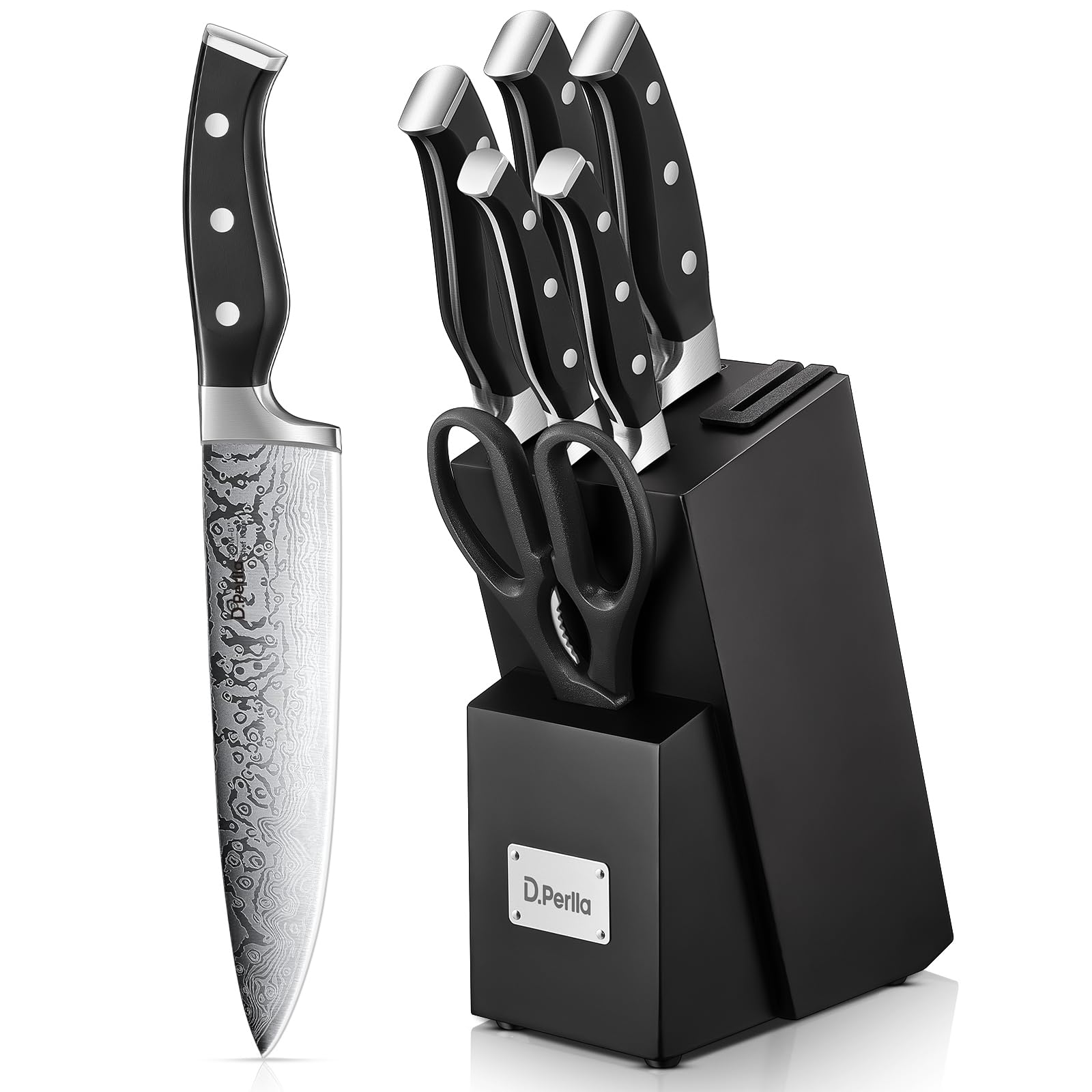
A self-sharpening block removes the habit requirement entirely by attaching a stone sharpening element to the exact motion you already perform daily: sliding a knife into and out of its storage slot. Each pass lightly hones the edge, so instead of sharpness declining steadily between occasional deliberate sharpenings, it stays maintained through ordinary use.
This does not replace a proper sharpening stone for a blade that has already gone significantly dull or been damaged — a built-in block sharpener maintains, it does not restore. But for the everyday maintenance that most people never get around to, it closes the single biggest gap between how sharp a knife set is on day one and how sharp it stays a year later.
Full-tang construction, where the blade metal runs the complete length into the handle rather than stopping at a bonded joint, is the other detail worth understanding: it is both a strength feature (less likely to loosen or break at the handle over years of use) and a balance feature, since the extended steel shifts the knife's centre of mass toward the handle for more controlled cuts.