

The complete guide
How to choose between a Japanese and a Western knife set
Both traditions can make an excellent knife. The real differences are in blade profile, steel hardness and how much maintenance you are willing to do — and once you know what to look for, the right set for your kitchen becomes obvious.
Blade profile: santoku vs chef's knife
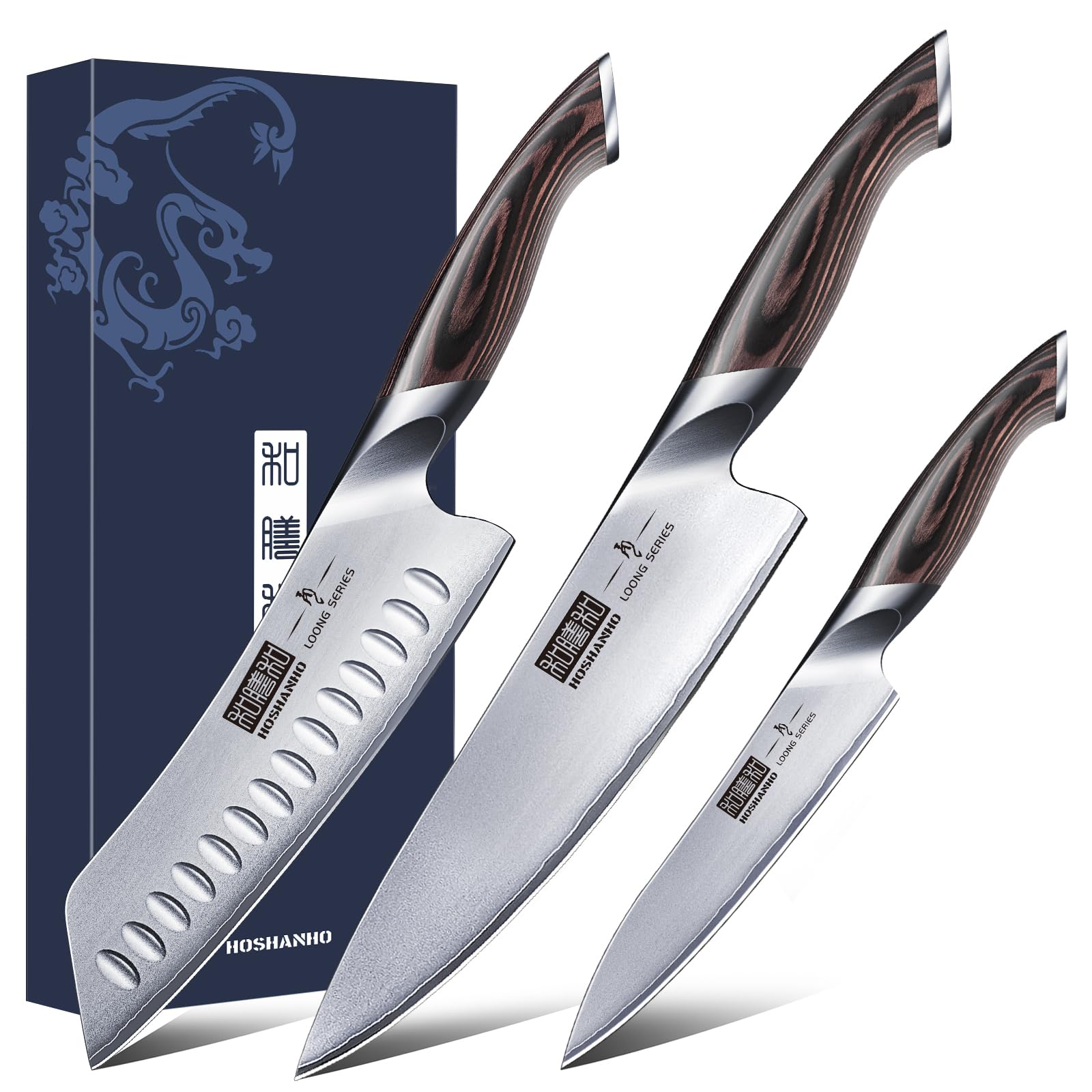
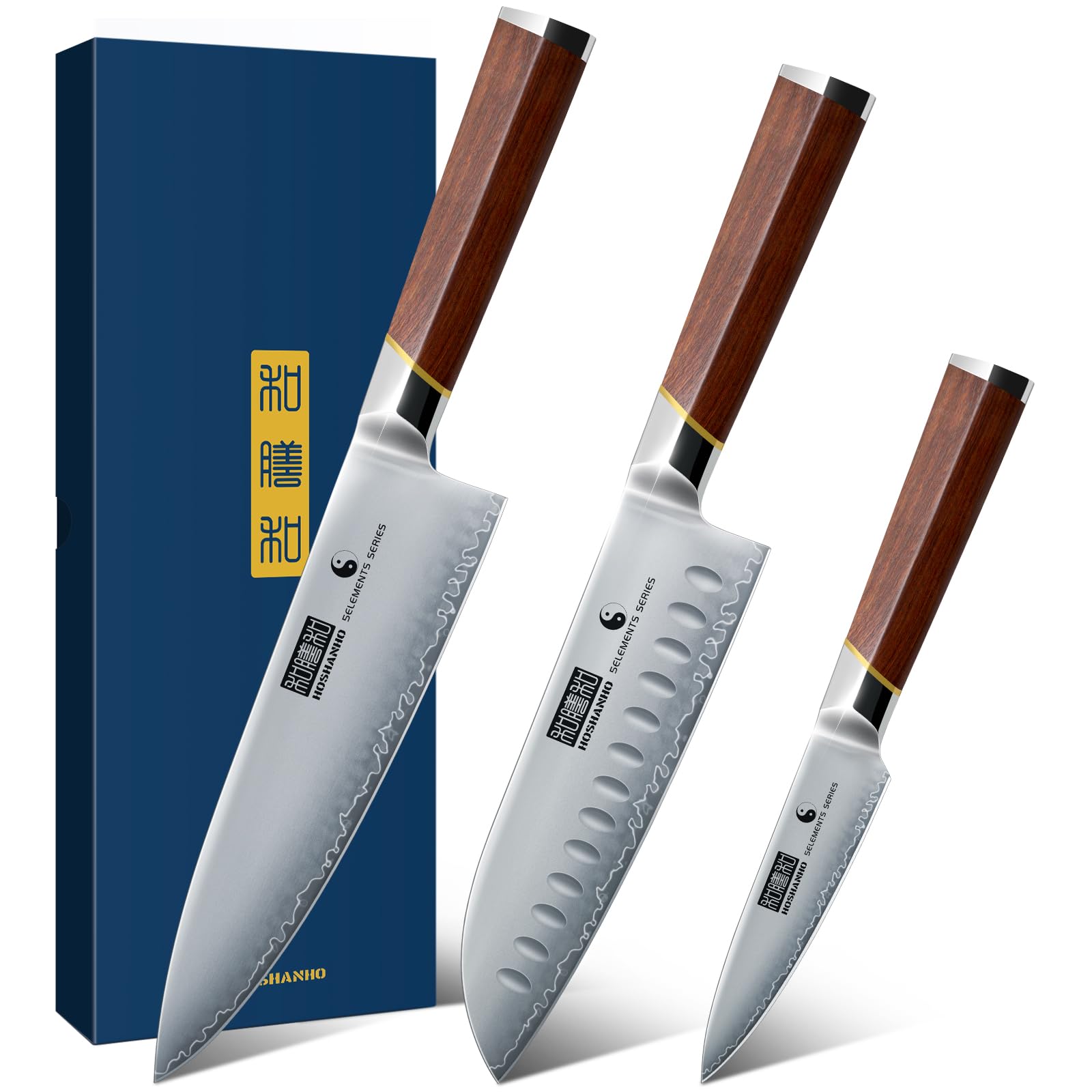
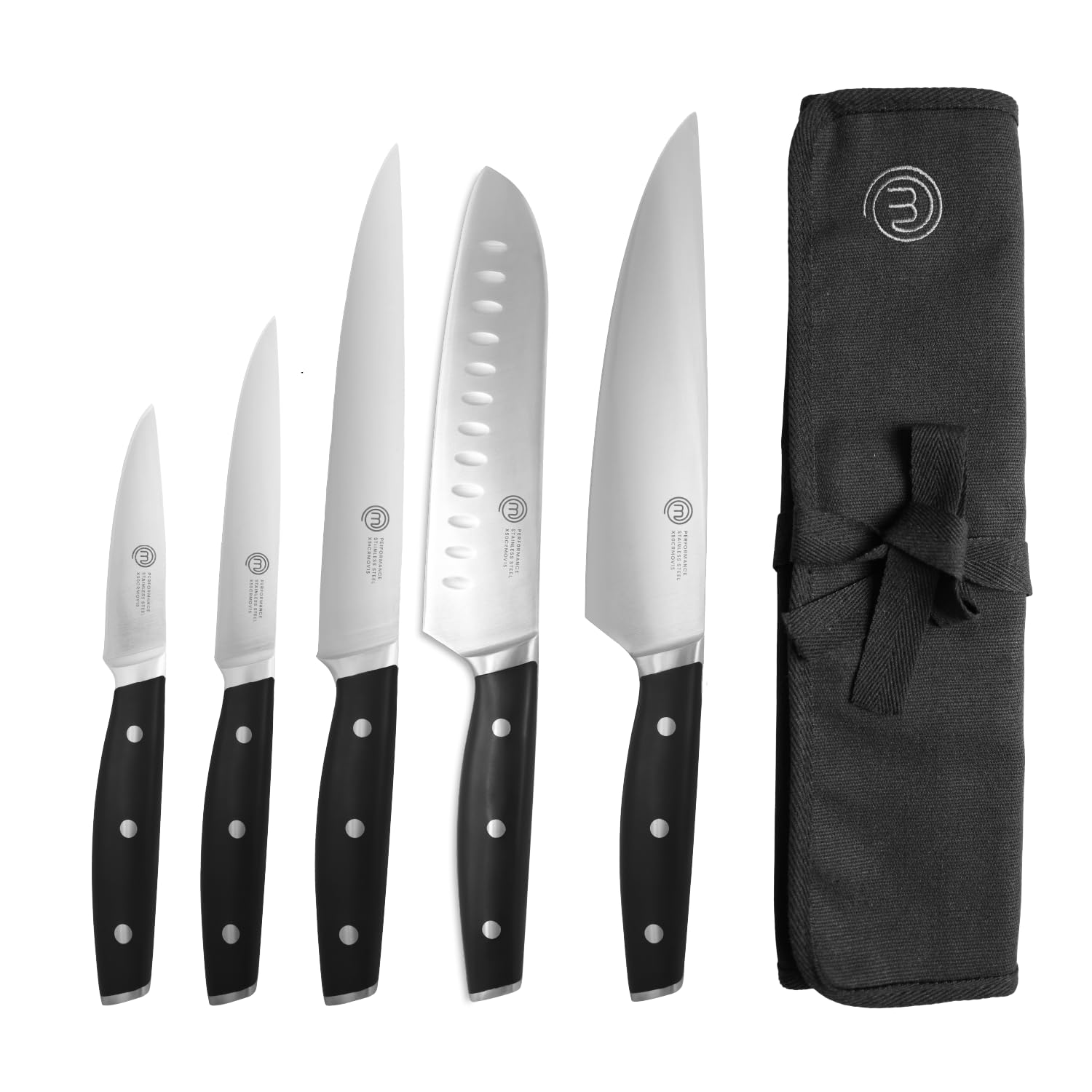
A Japanese santoku is flatter and shorter than a Western chef's knife, designed for a straight up-and-down push cut rather than the rocking motion a curved Western blade encourages. That makes it easier to control for precise vegetable, fish and boneless meat work, especially for someone newer to knife skills. A curved Western chef's knife is more forgiving for the rock-chop most home cooks already know, and better suited to larger, tougher cuts.
Steel hardness: what the HRC number actually means
Hardness on the Rockwell C scale (HRC) trades edge retention against toughness. Sets in this range span 56 HRC (Rockingham Forge, D.Perlla, ZWILLING) up to 62-63 HRC (both SHAN ZU sets). Higher HRC holds a working edge through more cutting before it needs attention, but is more prone to chipping under hard use — bone, frozen food, or a rough cutting board. If you cook varied, heavier tasks daily, a mid-range 56-58 HRC set forgives more. If you want the sharpest possible edge for precise work and are willing to use a whetstone rather than a pull-through sharpener, a 60+ HRC set rewards the care.
Real Damascus vs a decorative pattern
Genuine Damascus, like the SHAN ZU 67-layer set in this range, is forged by folding and layering steel together, giving both a visual pattern and a structural benefit — a hard core wrapped in tougher outer layers. A laser-etched "Damascus" knife is a single ordinary blade with a pattern burned onto the surface purely for looks, and that pattern can wear away with repeated sharpening because it was never part of the steel's structure. If the pattern matters to you, check whether a listing describes a layer count and a forging process, or just a finish.
Maintenance: sharpening, washing and storage
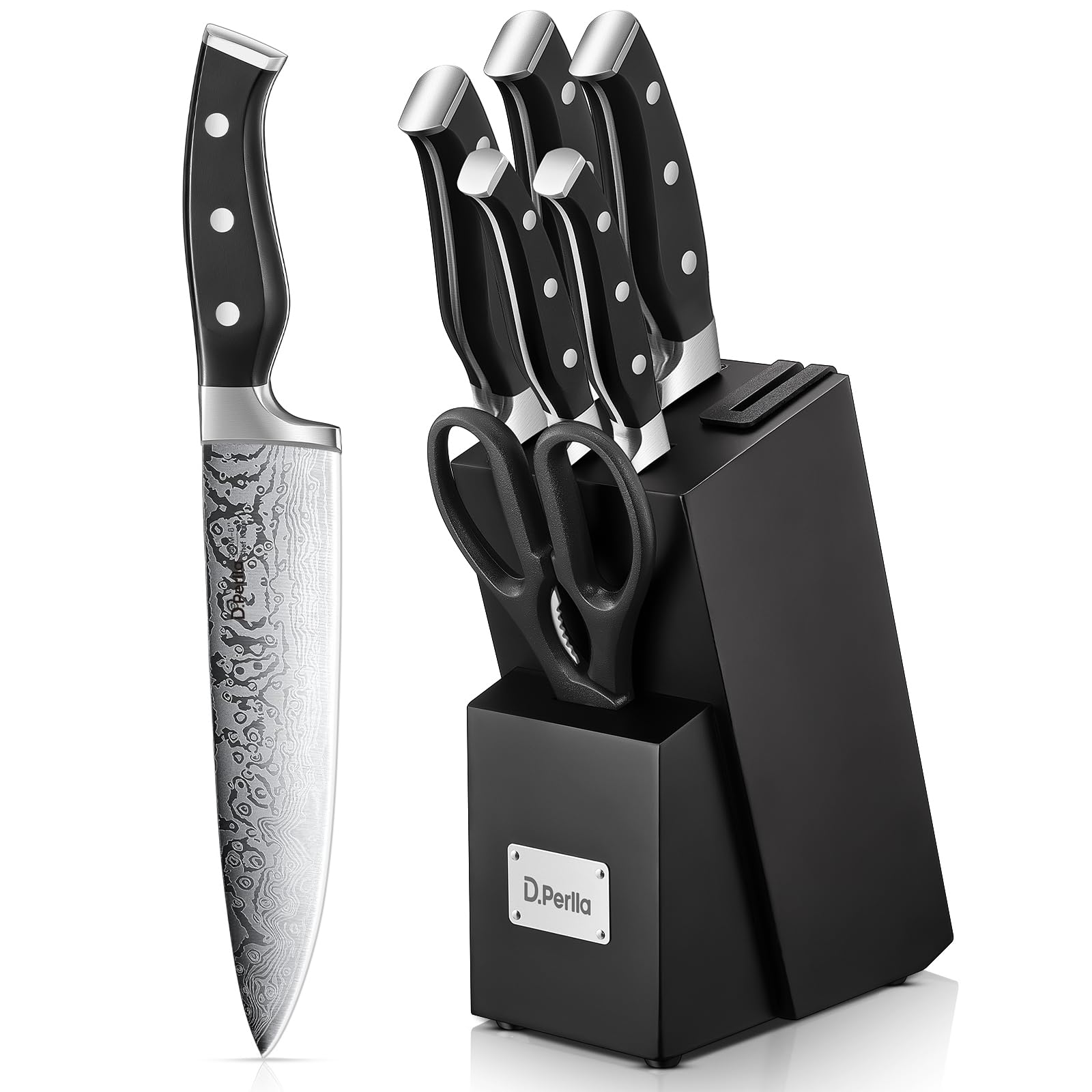
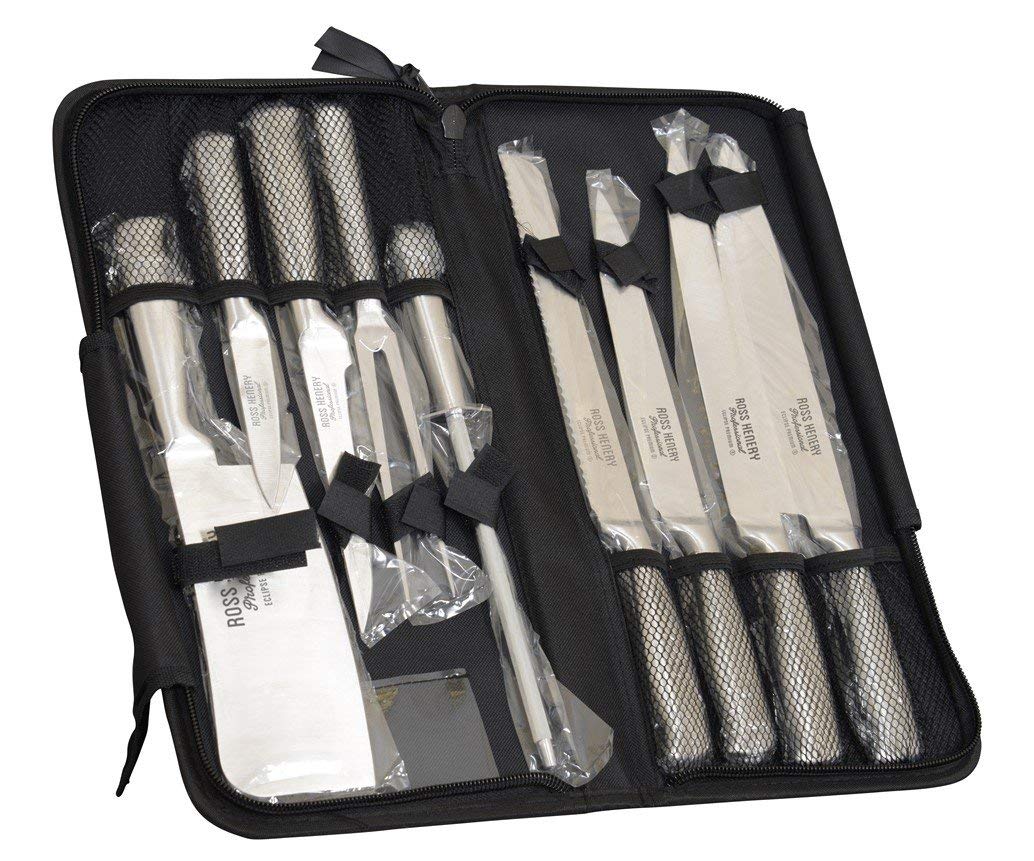
Every set here is best hand washed, though the D.Perlla and Eclipse sets are dishwasher safe if convenience matters more than maximum edge life. The D.Perlla block sharpens passively through normal use; every other set needs an occasional whetstone or honing steel session, more often for harder 60+ HRC blades. Storage matters too — a roll bag (SYOKAMI) suits a cook who moves kitchens, while a block (D.Perlla) or case (Eclipse, Rockingham Forge) suits a fixed kitchen.
Matching a set to how you actually cook
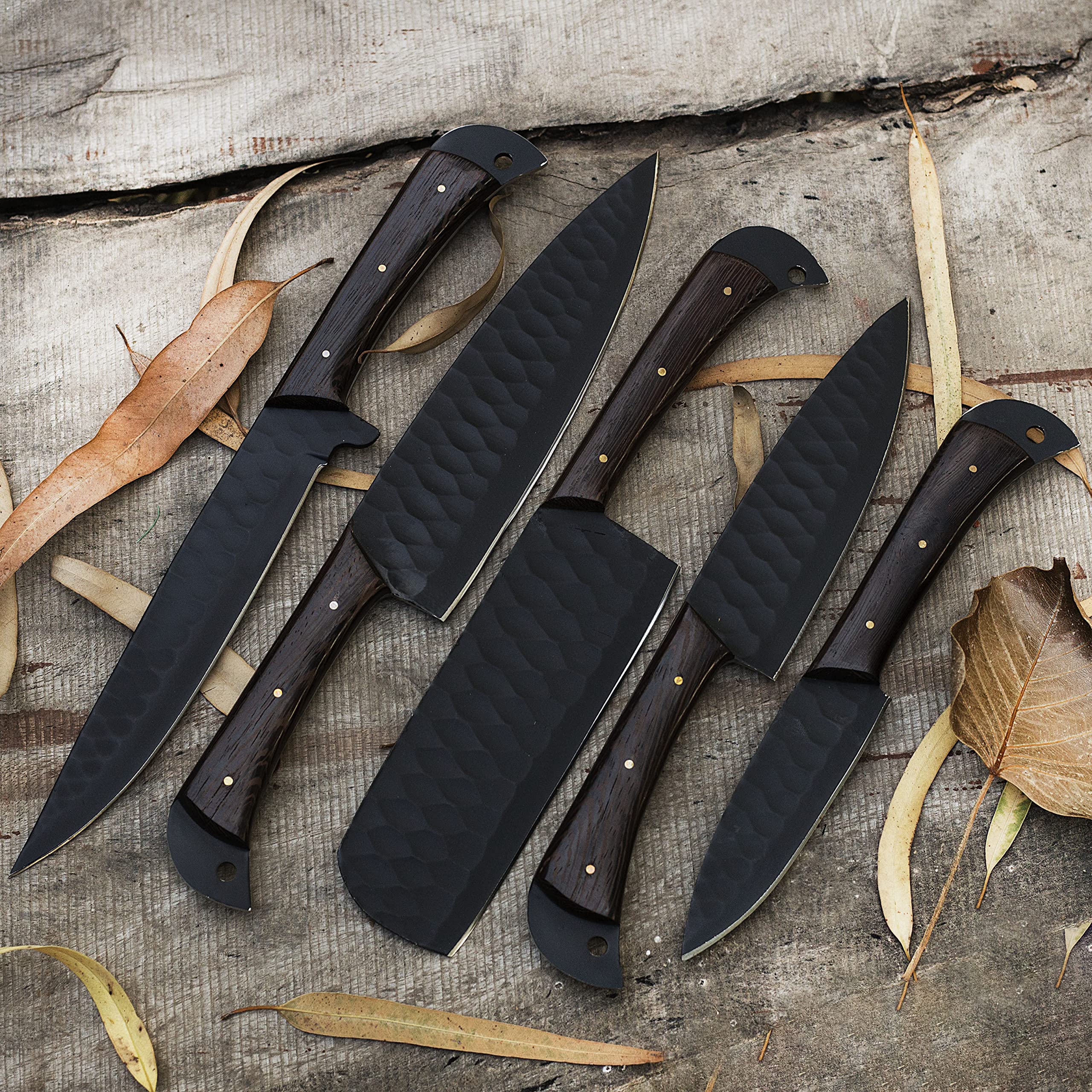
A focused 3-piece set (both SHAN ZU sets, ZWILLING) covers chef, santoku or paring work for someone who already knows which knives they reach for. A larger 7-10 piece set (PAUDIN, SYOKAMI, Rockingham Forge, D.Perlla, Eclipse) is the safer choice for a first proper set, or a household kitchen where several people cook. If you cook professionally or daily at volume, prioritise single-piece forged construction (ZWILLING, Eclipse) and a real guarantee over a lower price.