The complete guide
Laminated steel and hardwood: a traditional knife, done well
Some knives chase a single headline number — the hardest steel, the most layers — while the genuinely good ones balance several things at once. A traditional Japanese knife with a laminated blade and a hardwood handle is a good example of that balance, and it is worth understanding what each part is doing.
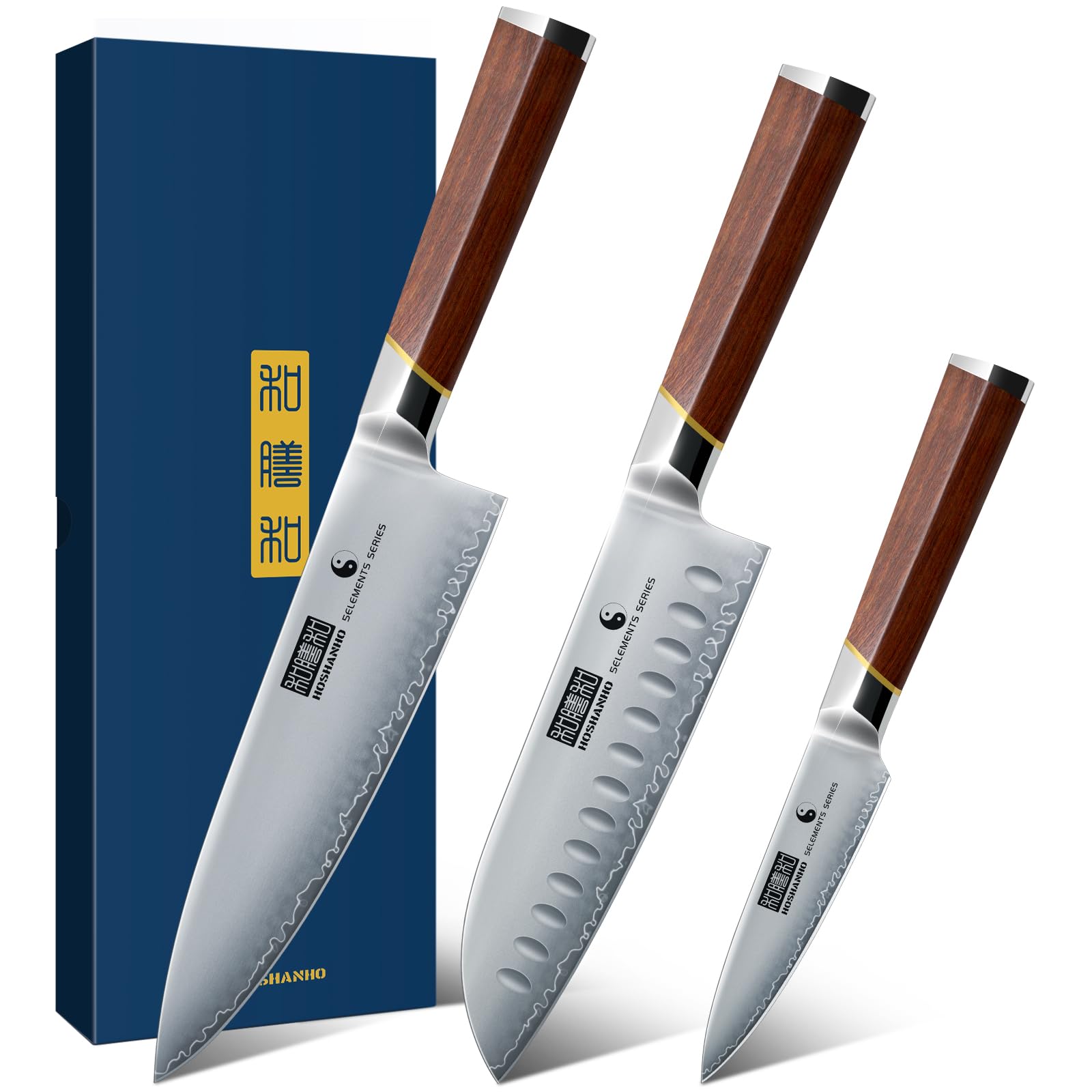
The blade uses laminated, or san-mai, construction: a hard cutting core wrapped in softer outer layers of steel. On its own, very hard steel takes a superb edge but can be brittle; very soft steel is tough but goes blunt fast. Laminating a hard core (here 10Cr15CoMoV at 60-62 HRC) inside softer layers gives you the best of both — a keen, long-lasting edge that still resists chipping.
The edge geometry matters too. A 15-degree double bevel is a fine, sharp angle that still works for everyday two-sided cutting, so you get a clean slice without needing the single-bevel technique of specialist Japanese blades. It is the sensible sweet spot for a home cook who wants real sharpness.
Finally the handle. Genuine rosewood is dense, warm and beautifully grained — a classic for good reason — and shaped ergonomically it gives a secure, low-fatigue grip. Hand wash and dry it, keep it out of the dishwasher, and the whole knife ages the way a good traditional tool should: getting more characterful, not more worn out.