The complete guide
Building your first Japanese-style knife set
Most people upgrade their knives once, when they finally get tired of a dull, mismatched drawer set. The question worth answering before that upgrade is whether to buy Western shapes you already know, or add a Japanese-profile blade like a santoku into the mix.
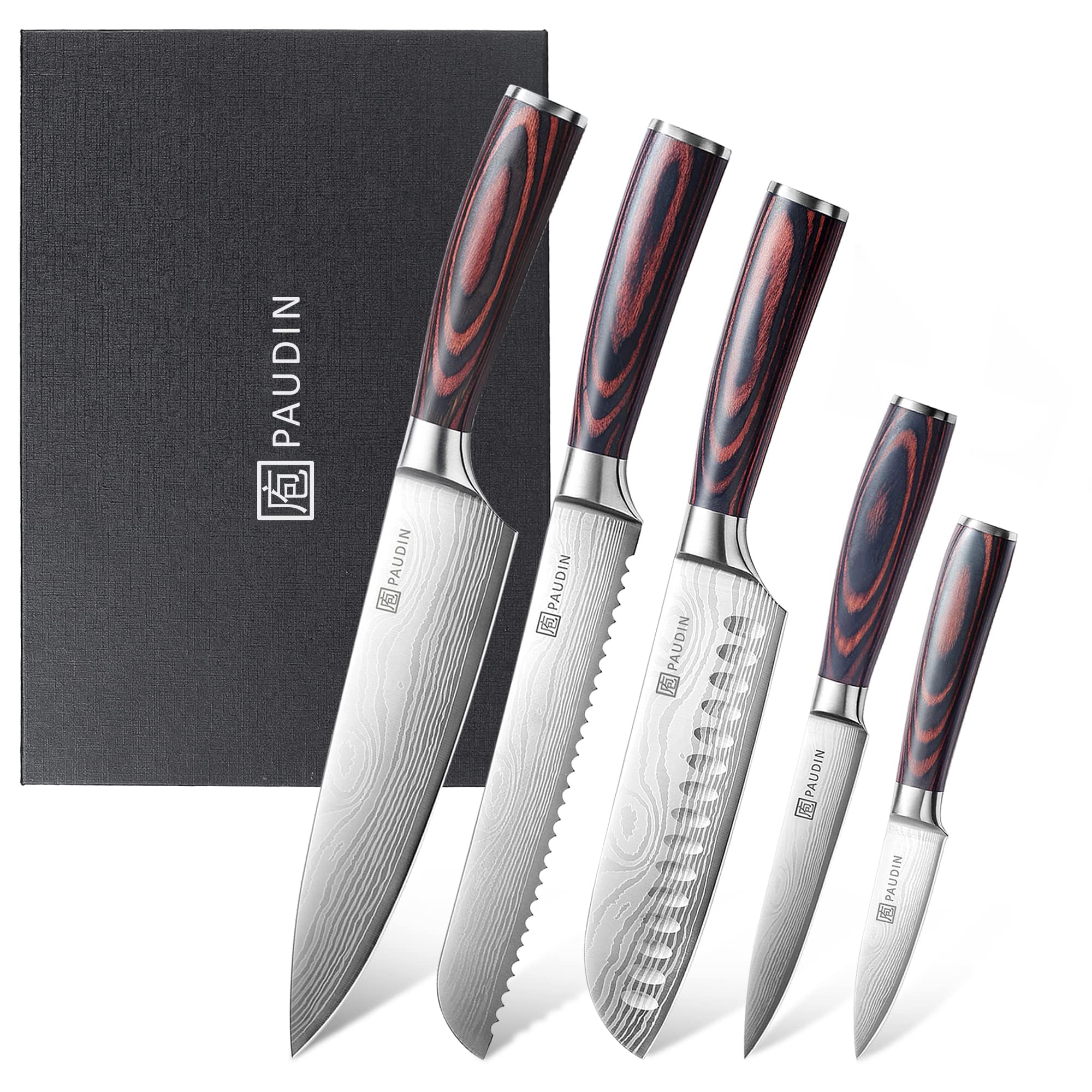
A santoku's flatter profile and shorter length make it easier to control on a cutting board than a full-length chef knife, particularly for fish, boneless meat and vegetables cut with a straight down-and-up motion rather than a rock. That is why this set pairs one alongside the familiar 8" chef knife rather than replacing it — you get both techniques covered without having to relearn everything at once.
Steel hardness matters more than most first-time buyers expect. A soft stainless blade (below 54 HRC) rolls its edge within a few sessions of real cooking, which is why cheap sets feel sharp for a week and then frustrating forever after. At 56+ HRC, this set's edge lasts long enough between sharpenings that a home cook can get away with a honing steel most weeks and a proper sharpen only a few times a year.
Handle care is the detail people skip. Pakkawood does not need oiling like raw wood, but it still prefers a hand wash and a dry towel over sitting wet in a sink — that single habit adds years to any handle, wood or composite.