The complete guide
What blade hardness (HRC) actually means for you
Knife descriptions throw around a number — 56 HRC, 60 HRC, 62 HRC — and most buyers skim past it. But that single figure, the Rockwell hardness of the steel, tells you more about how a knife will feel to live with than almost anything else on the spec sheet.
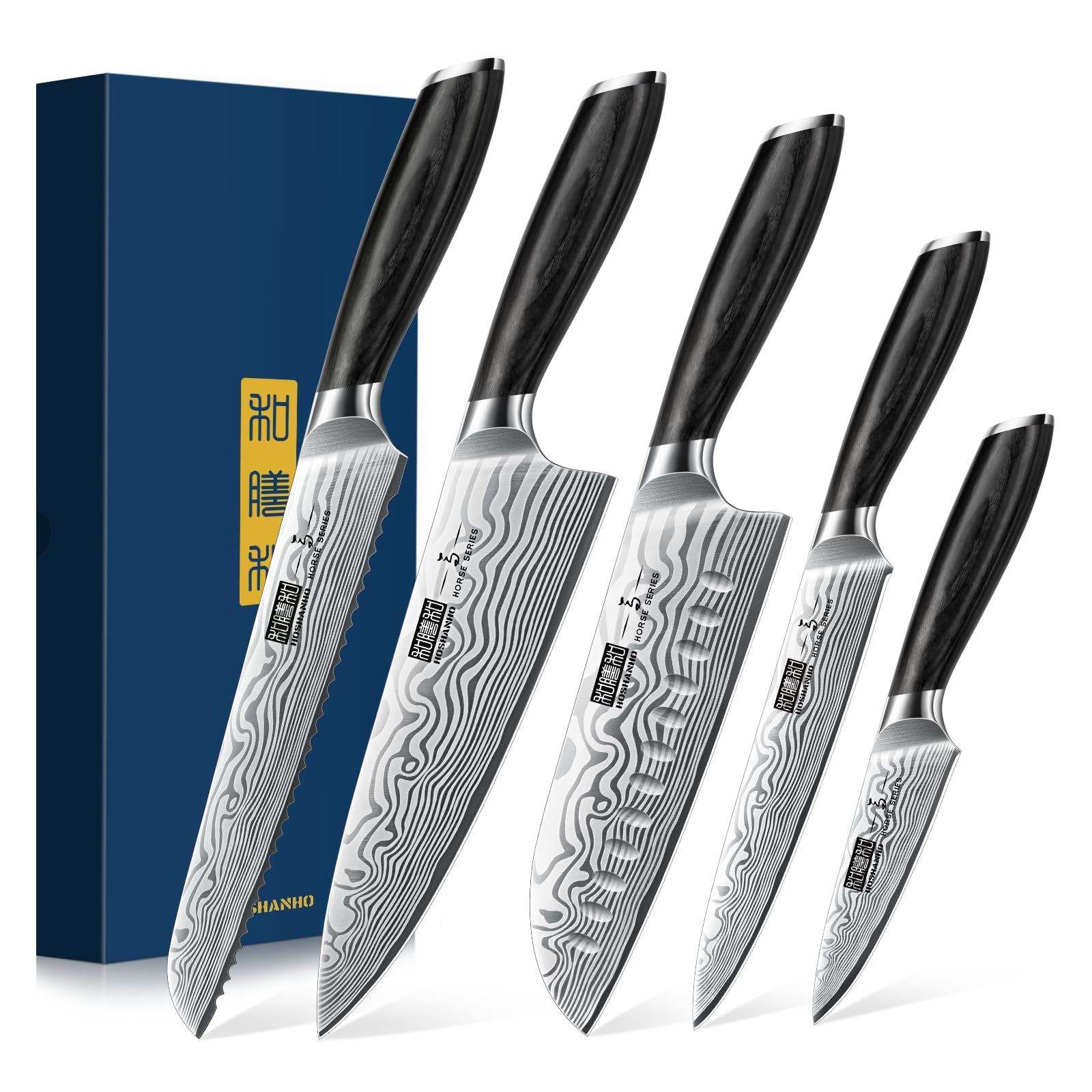
Harder steel holds a fine edge for longer. A blade at 62 HRC, like this set, keeps slicing cleanly through far more use than a softer 56 HRC blade before it needs honing or sharpening. For a home cook who never quite gets round to sharpening, that is the difference between knives that stay sharp for months and ones that feel blunt within weeks.
There is a trade-off, and it is worth knowing: very hard steel is a little less forgiving of abuse. It does not like being twisted against bone, dropped, or run through a dishwasher, and it is best sharpened at the correct angle. Treated sensibly — hand washed, used on a proper board — it rewards you with an edge that softer knives simply cannot hold.
Powder steel, used here, is how you get that hardness without brittleness. Made from finely powdered metal compacted into an exceptionally even grain, it can be both hard and keen. Pair it with full-tang pakkawood handles that resist a wet kitchen, and you have a set built to stay sharp and solid for years.