The complete guide
Why a wooden handle changes how a knife feels
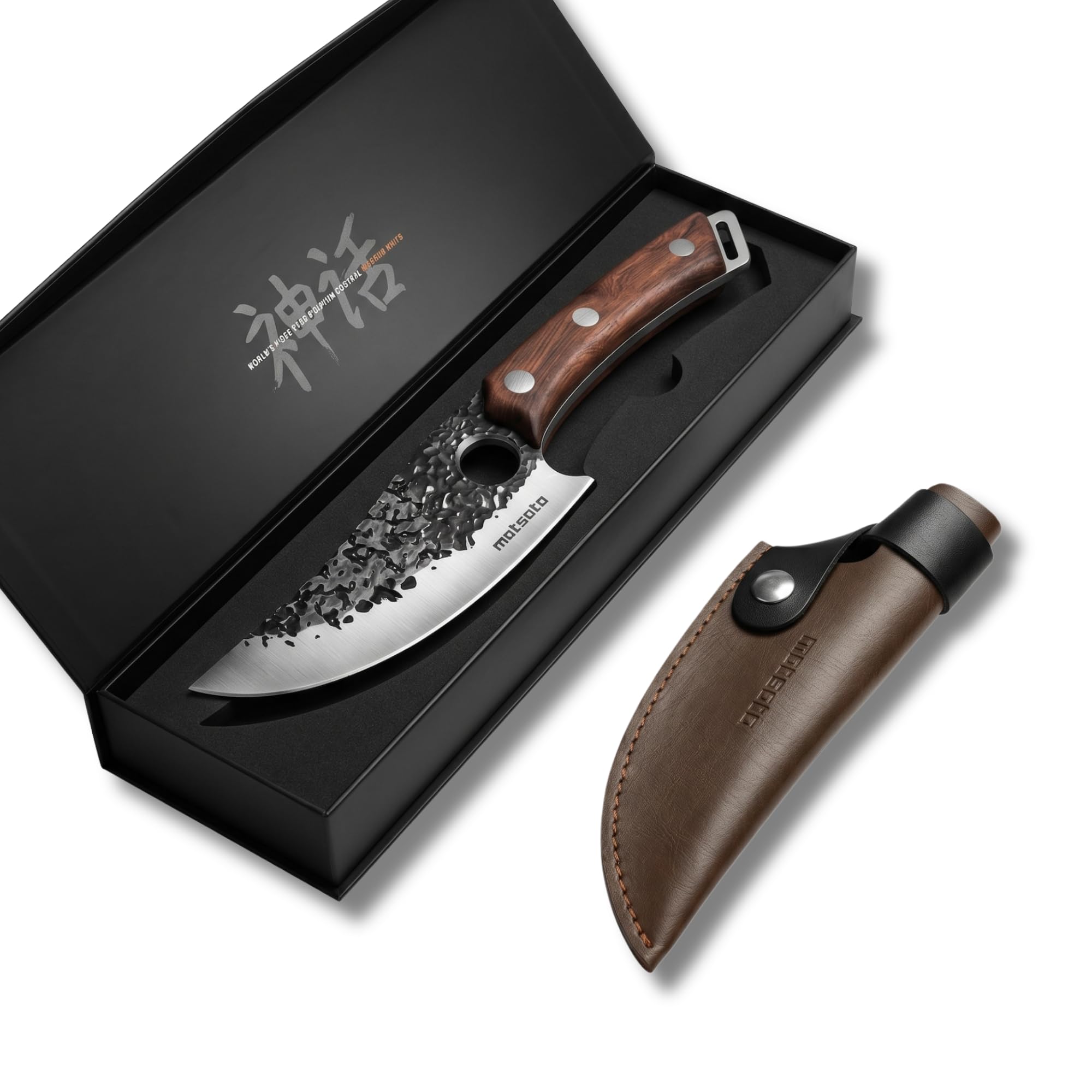
Pick up two knives with identical blades — one with a moulded plastic handle, one with a solid wooden one — and the difference is immediate. It is not about looks alone; wood changes where the weight sits and how the knife balances, and that changes how controlled it feels through a cut.
The reason is density and placement. A dense hardwood like oak puts real weight at the grip end, which counterbalances the blade so the knife pivots naturally in the hand rather than pulling toward the tip. Lightweight plastic handles cannot do this, which is why cheaper knives can feel front-heavy and tiring over a long prep session.
There is also the plain fact that wood feels better. It is warmer to the touch than steel, less clinical than plastic, and it is the material traditional knives have used for centuries because it works. For a lot of cooks, that tactile quality is reason enough to choose a wood-handled set.
The trade-off is care, and it is a small one. Wood does not like being left wet or run through a dishwasher, so a wood-handled knife wants a quick hand wash and dry after use. Do that, and the handle keeps its warmth, its looks and its balance for many years — which a disposable plastic handle never promises in the first place.