The complete guide
The specialist blades in a big set, and when they earn their place
A seventeen-piece knife set only makes sense if you understand what the extra blades are actually for. The core knives — chef, bread, paring — do most of the work in any kitchen. The value of a big set lives in the specialist blades, and whether they earn their place depends entirely on how you cook.
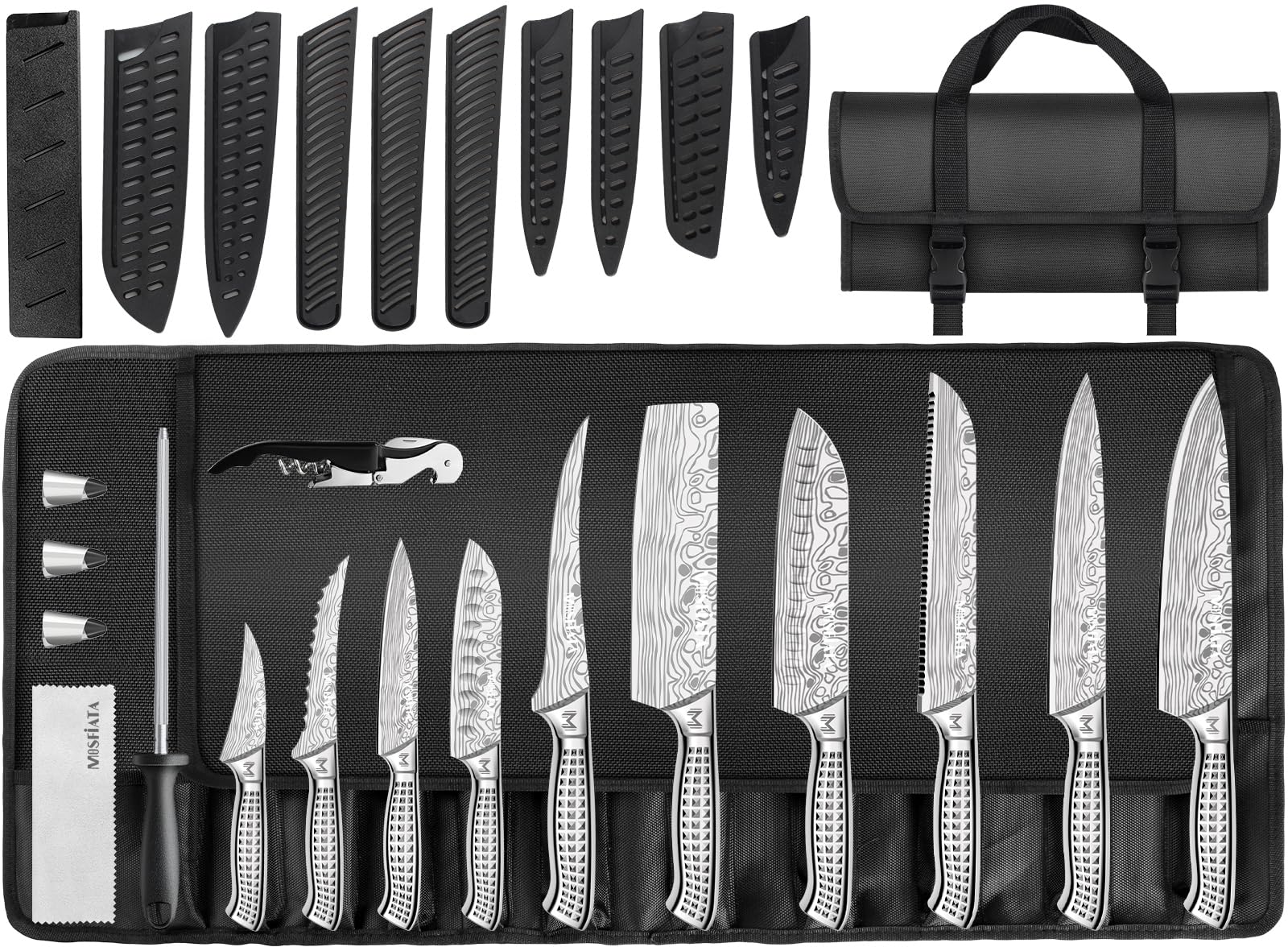
Take the three that define this set. A nakiri is a tall, flat-edged vegetable knife designed to chop straight down through produce in one clean motion, without the rocking a chef knife needs — a genuine time-saver if you prep a lot of vegetables. A filleting knife is thin and flexible so it can follow a fish's bones and lift clean fillets, a job a stiff blade butchers. A tomato knife is finely serrated to slice through soft skins without crushing the flesh underneath.
If those descriptions match jobs you actually do, the specialist blades transform your cooking; if they do not, they will sit in the roll. That is the honest test for any large set — not the piece count, but how many of the specialist knives map to your real kitchen.
For the cook who does want everything, this format is the sensible way to own it. Full-tang, hard high-carbon blades built for heavy use, each in a guarded slot, all rolling into one case — a complete kitchen of knives that still fits in a single carry, with a sharpening steel packed in to keep the whole lot honed.