The complete guide
Why three good knives beat a drawer full of mediocre ones
Kitchen shops sell knives by the count, because a bigger number looks like better value on a shelf. But cooks rarely use more than a handful of blades, and a twelve-knife block is usually ten knives gathering dust around the two that get sharpened to death. Buying fewer, better knives is almost always the smarter move.
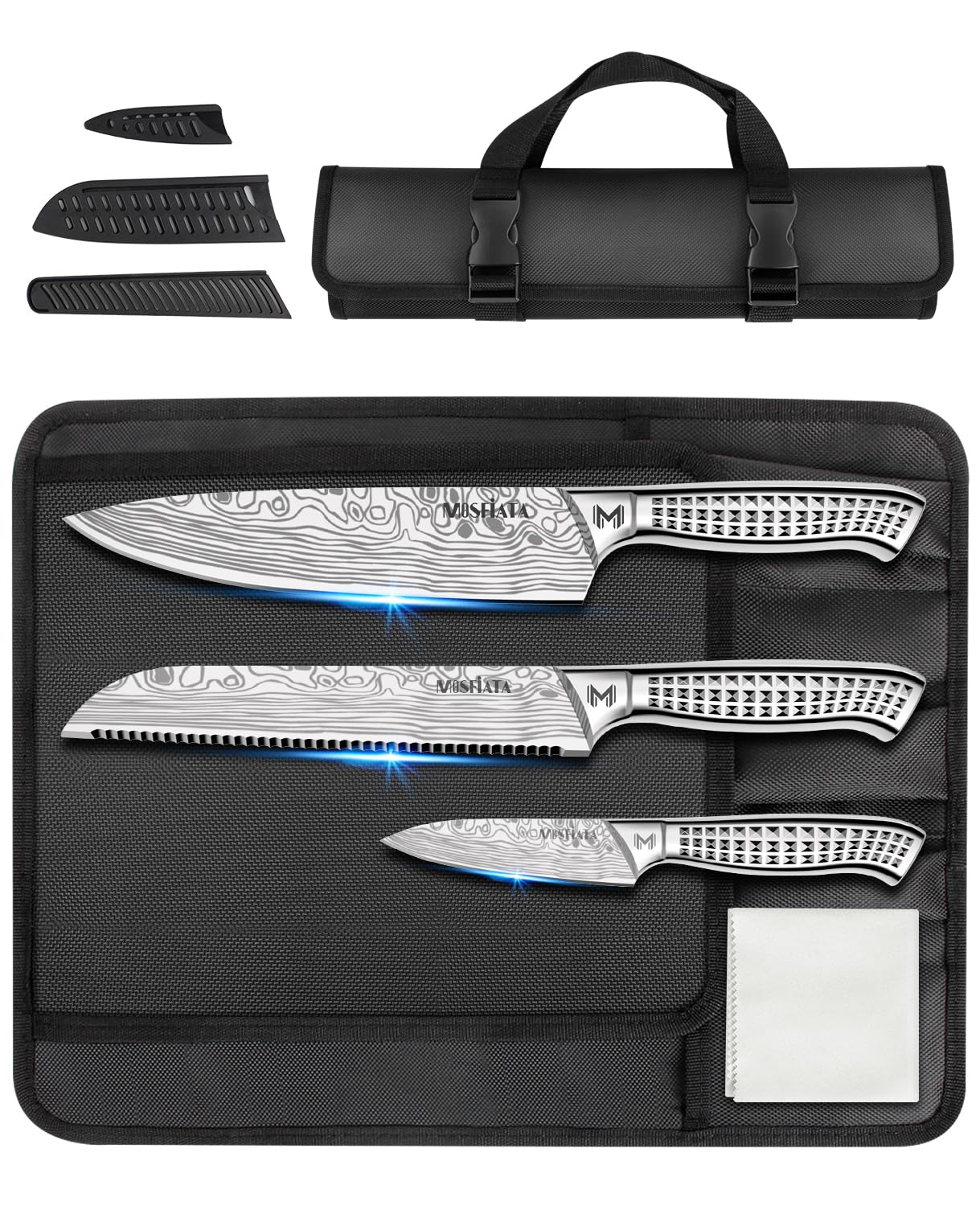
The three that earn their place are consistent across nearly every kitchen. A chef knife does the chopping, slicing and dicing that make up most prep. A serrated bread knife handles anything with a crust or a slippery skin, where a straight edge slides. And a small paring or fruit knife takes the close, in-hand jobs a big blade is clumsy at.
With a short set, construction quality matters more per knife, because each one works harder. A seamless one-piece steel handle is worth looking for: it has no rivet seam where food and water collect, and no join to loosen, so it stays hygienic and solid through years of daily use.
The last advantage of a small set is that it travels. Three knives in a guarded roll bag fit in a holiday bag or a student's box of kitchen kit, where a full block never would — so the same honest set that serves your home kitchen comes with you when the kitchen moves.