The complete guide
When a basic knife set stops being enough
Almost everyone starts with a small knife set, and for a while it is plenty. Then the cooking gets more ambitious — a whole fish to fillet, a chicken to joint, a roast to carve at the table — and the same chef knife that handled everything before suddenly feels like the wrong tool for the job. That is the moment to look at a larger, more specialised set.
The knives worth upgrading for are the specialist ones. A filleting knife has a thin, flexible blade that follows a fish's bones to lift clean fillets, something a stiff chef knife mangles. A boning knife is shaped and stiffened to separate meat from bone without hacking. And a carving knife and fork turn serving a roast from a struggle into a clean, controlled job.
Construction is worth stepping up too. Forged blades — shaped from a heated billet rather than stamped from a sheet — carry more weight and hold their geometry better, which you feel most on the heavier jobs a bigger set is bought for. Pakkawood handles, a resin-stabilised wood, keep the look and warmth of timber while resisting the cracking that plain wood suffers in a busy kitchen.
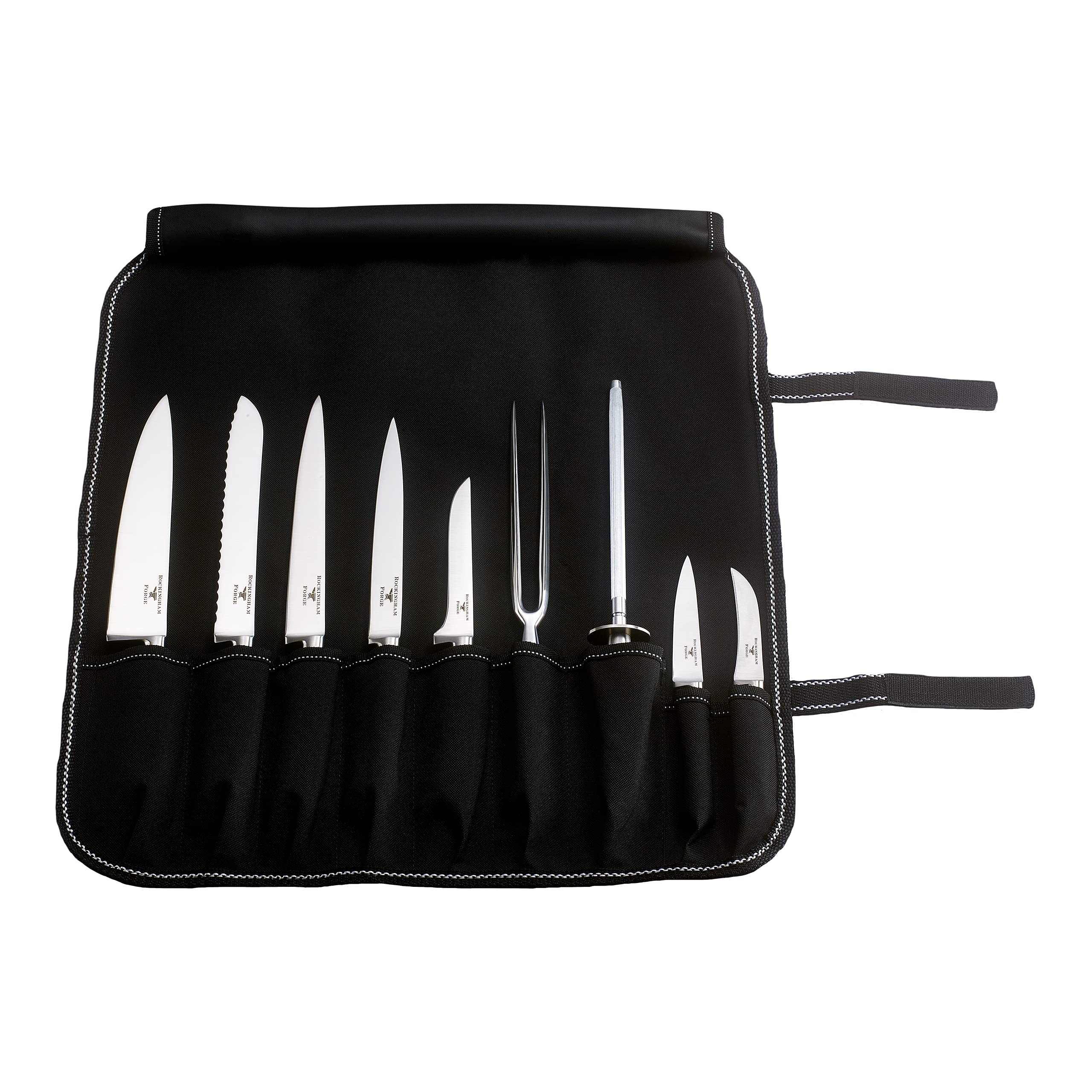
The last practical point is storage. A ten-piece set does not have to mean a bulky block on the counter — a soft roll case keeps the whole range tidy and portable. For a cook who has outgrown the basics but not the kitchen space, that is the format that makes a bigger set actually livable.