The complete guide
Serrated vs straight steak knives: which is better?
Almost every steak knife sold is serrated, and there is one honest reason for it: a toothed edge keeps biting through meat for years even when it is technically blunt, so it never needs sharpening. For a manufacturer and a busy household that is convenient. For the steak, it is not ideal.
Serrations work by sawing, and sawing tears the fibres of the meat rather than parting them. That drags juice and flavour out onto the plate — the opposite of what you want from a steak you have cooked carefully. A straight, genuinely sharp edge slices cleanly in a single stroke, keeping the cut tidy and the juices in.
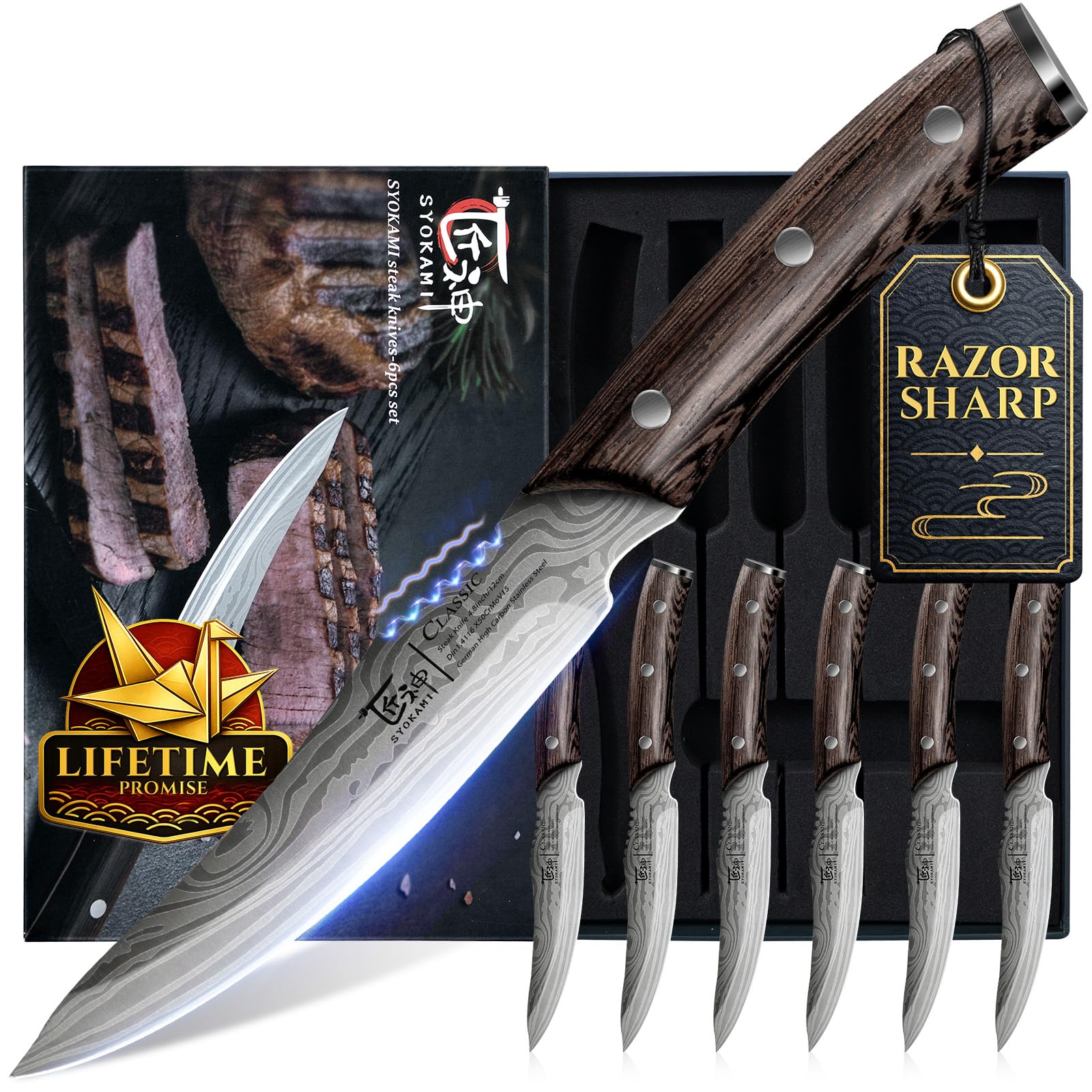
The catch is that a straight edge has to be kept sharp, which is why cheap straight steak knives disappoint. These solve it with hard German steel at 56+ HRC, hand-sharpened to a fine 15-degree angle — keen enough to slice properly, and able to be resharpened rather than binned when a serrated knife would have gone dull for good.
The other details are the kind you only notice once you have them: a blade that sits up off the tablecloth so the edge is not resting in juices, a grip textured to stay secure with greasy hands, and dense wenge wood handles that feel like a proper knife rather than cutlery. Together they turn steak night from sawing into slicing.