The complete guide
How to tell real Damascus from a printed pattern
Damascus knives look spectacular, and that look sells a lot of knives — which is exactly why the word gets abused. Plenty of budget "Damascus" knives are ordinary steel with a wavy pattern etched or even printed onto the surface. It washes and wears off, and it does nothing for how the knife cuts. Knowing the difference protects your money.
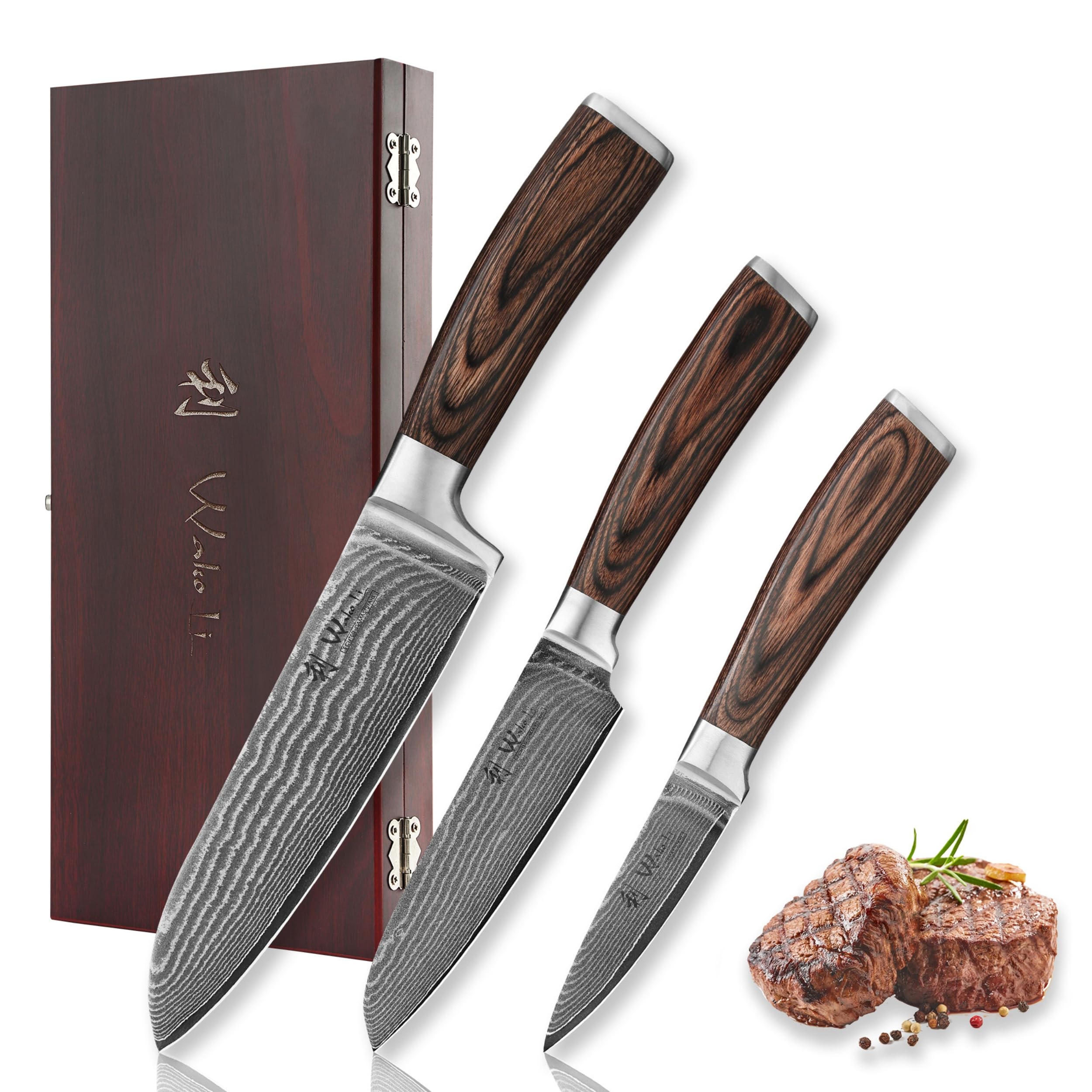
Genuine Damascus, like this Wakoli set, is built from many real layers of steel folded together — 67 layers here — around a harder cutting core. The pattern is the actual boundary between those layers, revealed by polishing and etching, so it runs into the steel rather than sitting on top of it. It is structural, not cosmetic.
The core is where the cutting performance lives. A high-performance steel like VG10 forms the hard centre (around 60 HRC) that takes and holds the edge, while the softer folded layers around it add toughness and resist chipping. That hard-core, resilient-shell combination is the whole point of the construction, and it is centuries old.
The last tell is the edge. A real Japanese-style blade is honed to a narrow angle — 12-14 degrees per side here — ideally on waterstones by hand. That is what delivers the clean, surgical slice these knives are bought for. A printed pattern on soft steel with a rough machine grind gives you none of that, however pretty it looks in the photo.